
Introduction
In today’s world, one of the biggest concerns for parents is how to improve their child’s memory and concentration. Every parent wants their child to be a fast learner, perform well in studies, and also develop creativity and smartness. However, due to digital distractions, junk food, and stress, children’s focus is becoming weaker day by day. That’s why the question arises — “How to improve kids’ memory naturally?”
A child’s memory is the foundation of learning. If their memory is strong, understanding lessons, recalling information, and performing well in exams becomes easier. And it’s not limited to academics — memory is a lifelong skill that boosts decision-making, logical thinking, and creativity.
In this blog, we’ll go step by step to understand what memory is, how it develops in children, and some scientifically proven ways to strengthen it naturally.
Understanding Memory in Kid
Table of Contents

Memory means storing, retaining, and recalling information when needed. Children’s memory functions differently from adults because their brains are still in the developing stage.
There are three main types of memory in kids:
learn to end How to improve kids memory ?
- Short-Term Memory
- Temporary memory that stores information for a few seconds or minutes.
- Example: A child repeats a sentence the teacher just said.
- Long-Term Memory (LTM)
- This is permanent and stores knowledge and skills for a long time.
- Example: Remembering a poem or learning how to ride a bicycle.
- Working Memory
- The active memory used for problem-solving and multitasking.
- Example: Remembering steps while solving a math problem.
If a child’s working memory is weak, studying becomes a struggle. That’s why parents and teachers must focus on memory-building activities.
Brain Development in Children
- 0–2 years: Children learn through sensory and motor experiences.
- 2–7 years: Language and imagination start developing.
- 7–12 years: Logical thinking, working memory, and problem-solving grow rapidly.
This is the ideal age to introduce memory-boosting habits and learning games.
Factors That Affect Kids’ Memory
- Lack of Sleep – Children need 8–10 hours of quality sleep. During sleep, the brain organizes and stores learned information.
- Poor Nutrition – Junk and oily foods weaken memory. The brain needs omega-3s, proteins, and vitamins.
- Stress & Pressure – Too much workload or comparison causes anxiety and reduces focus.
- Excessive Screen Time – Mobile games and long gadget use reduce attention span.
- Lack of Physical Activity – Regular movement and outdoor play help improve brain function.
Proven Scientific Techniques to Improve Kids’ Memory
- Repetition & Spaced Learning – Revise lessons repeatedly with short gaps in between to boost long-term memory.
- Visualization & Imagination – Connect lessons with images, diagrams, or stories; the brain remembers visuals better.
- Mnemonics & Acronyms – Use fun tricks to memorize concepts. Example: “VIBGYOR” for rainbow colors.
- Chunking Method – Break big information into small, easy parts. Example: Divide a 10-digit number into 3–3–4 groups.
- Storytelling & Songs – Rhymes and stories improve recall and creativity.
- Multi-Sensory Learning – When kids see, hear, and write something, it strengthens their memory through multiple senses.
- Teach-Back Method – Ask your child to explain what they learned to someone else. It doubles retention.
- Mindfulness & Meditation – Short breathing exercises improve focus and calm the mind.
- Play-Based Learning – Games, puzzles, and quizzes make memory-building fun and engaging.
Healthy Lifestyle Habits to Boost Memory
- Proper Sleep
- 8–10 hours of sleep helps consolidate learning.
- Avoid gadgets before bedtime and set a simple night routine.
- Balanced Diet
- Feed the brain with nutrients like:
- Omega-3s: Walnuts, almonds, flaxseeds
- Fruits: Bananas, apples, oranges, berries
- Vegetables: Spinach, broccoli, carrots
- Protein: Milk, paneer, eggs
- Limit junk and sugary foods.
- Feed the brain with nutrients like:
- Regular Exercise & Yoga
- Improves blood flow to the brain and increases alertness.
- Activities like skipping, cycling, and yoga (especially pranayama) are great for focus.
- Hydration
- Dehydration can cause fatigue and poor concentration.
- Encourage 5–7 glasses of water daily plus hydrating fruits.
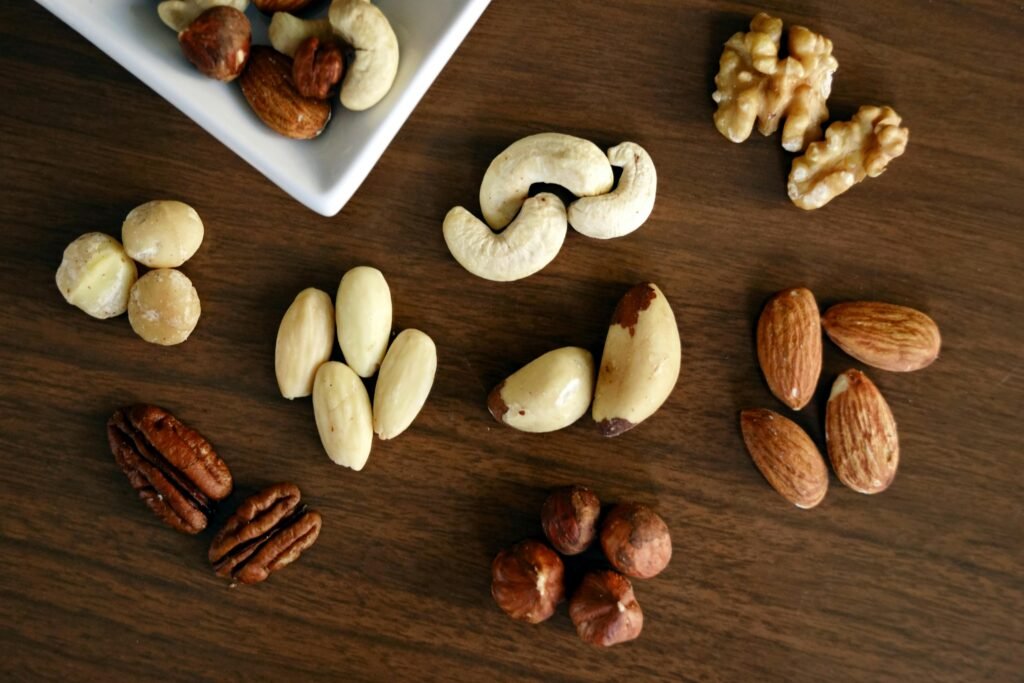
Superfoods for Brain & Memory
- Almonds (Badam): Rich in Vitamin E and good fats that improve focus.
- Walnuts (Akhrot): High in omega-3s for stronger brain cells.
- Eggs: Contain choline and protein for better brain function.
- Fruits (Banana, Orange, Berries): Provide antioxidants and Vitamin C to protect brain cells.
- Green Vegetables (Spinach, Broccoli): Packed with iron and vitamins for sharp thinking.
Tip: Add these superfoods to breakfast or snacks to naturally boost your child’s memory and focus.

Fun Games & Activities to Improve Memory
- Memory Card Games – Help visual recall.
- Puzzles & Brain Teasers – Strengthen logic and working memory.
- Outdoor Play – Activities like running or sports improve concentration and alertness.
- Creative Activities – Drawing, music, and painting enhance imagination and memory.
- Storytelling & Role Play – Boost both language and recall power.
Parents’ Role in Memory Development
- Encourage curiosity and let children ask questions.
- Appreciate small achievements to build confidence.
- Maintain a healthy balance between study and play.
- Avoid overpressure and constant comparison.
- Create a quiet, organized study space and structured routine.
Common Mistakes Parents Should Avoid
- Forcing too much study or strict schedules.
- Using gadgets as “babysitters.”
- Overloading homework or coaching classes.
- Ignoring sleep, nutrition, or outdoor play.
- Comparing children — it lowers confidence.
Benefits of a Strong Memory in Kids
- Better Academics: Faster learning and improved recall.
- Higher Confidence: Children trust their abilities more.
- Creative Thinking: Logical and imaginative problem-solving.
- Long-Term Brain Growth: Memory skills benefit them throughout life.
- Improved Focus: Helps in both studies and extracurricular activities.
FAQs (Frequently Asked Questions)
Q1. How can I plan my child’s daily routine for better memory?
A1. Ensure 8–10 hours of sleep, a nutritious diet, 30–45 minutes of outdoor play, short breaks during study, and multi-sensory learning.
Q2. Which games are best for improving memory?
A2. Memory cards, puzzles, chess, quizzes, storytelling, and role play.
Q3. How much screen time is okay for kids?
A3. For ages 2–7 years: maximum 1 hour; for 7–12 years: up to 2 hours. Avoid screens during study time.
Q4. Which foods make the brain stronger?
A4. Almonds, walnuts, eggs, milk, bananas, berries, spinach, and broccoli.
Q5. How important are parents in improving memory?
A5. Extremely important! Their encouragement and a positive home environment keep children motivated.
Conclusion
Improving a child’s memory is a gradual, consistent process. With healthy habits, proper diet, exercise, brain games, creative learning, and emotional support, a child’s memory can become naturally strong. Parents play a key role — their love, patience, and motivation make all the difference.
Start today with these small habits:
- Add superfoods and balanced meals
- Encourage 30 minutes of outdoor activity daily
- Introduce memory games and fun learning
- Maintain a positive, stress-free environment
Result: Your child will grow confident, creative, and smart — ready to perform their best in every area of life.